EMSAGS promotes sustainable livelihoods in the Paamaka area
In line with the EMSAGS Project's objective of promoting mercury-free mining technologies in the artisanal and small-scale gold mining sector, a Memorandum of Understanding (MoU) was signed in 2025 between the project, Rosebel Gold Mines (RGM), and Kamp Mining to establish a demonstration site on RGM's concession in Roma East, Brokopondo District.
Based on this MoU, the parties have worked together over the past period to establish the demonstration site. This collaboration aligns with EMSAGS' objectives of promoting environmentally responsible mining practices and reducing the negative impacts of small-scale gold mining on people and the environment. Through the demonstration site in Roma East, the EMSAGS Project has taken a concrete step towards making mercury-free gold mining more accessible to small-scale miners and supporting the transition towards a more environmentally responsible gold mining sector in Suriname.
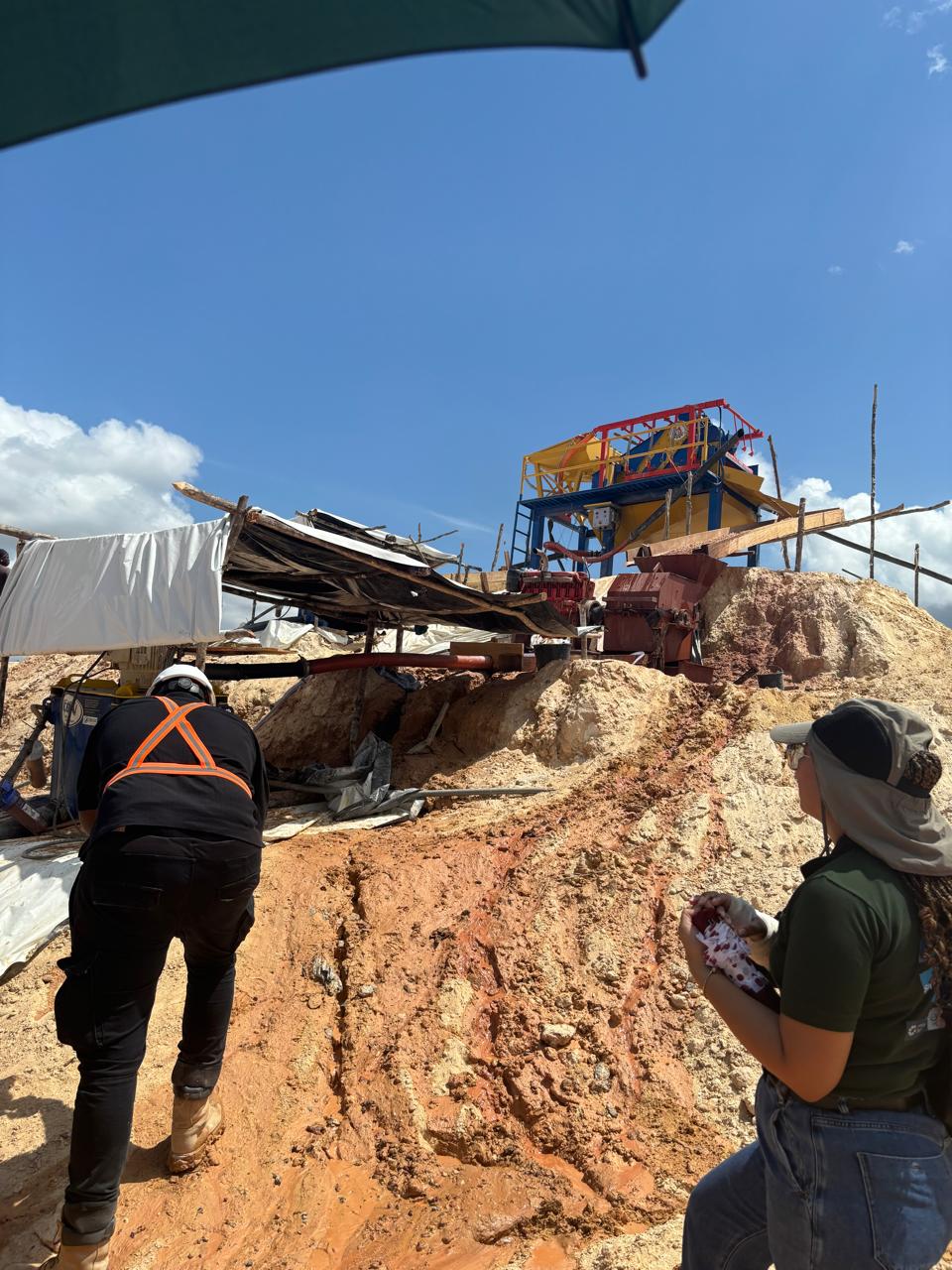
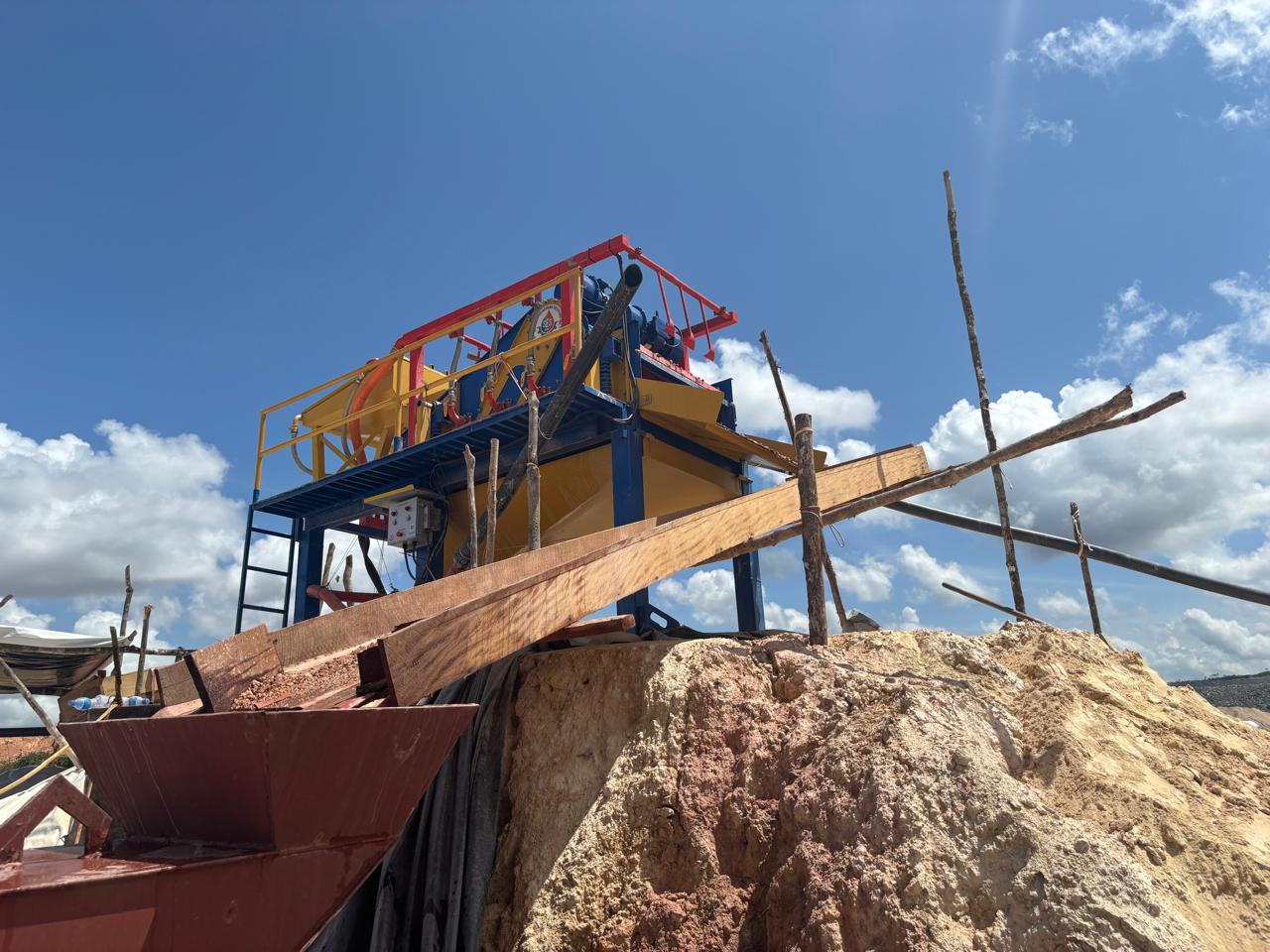
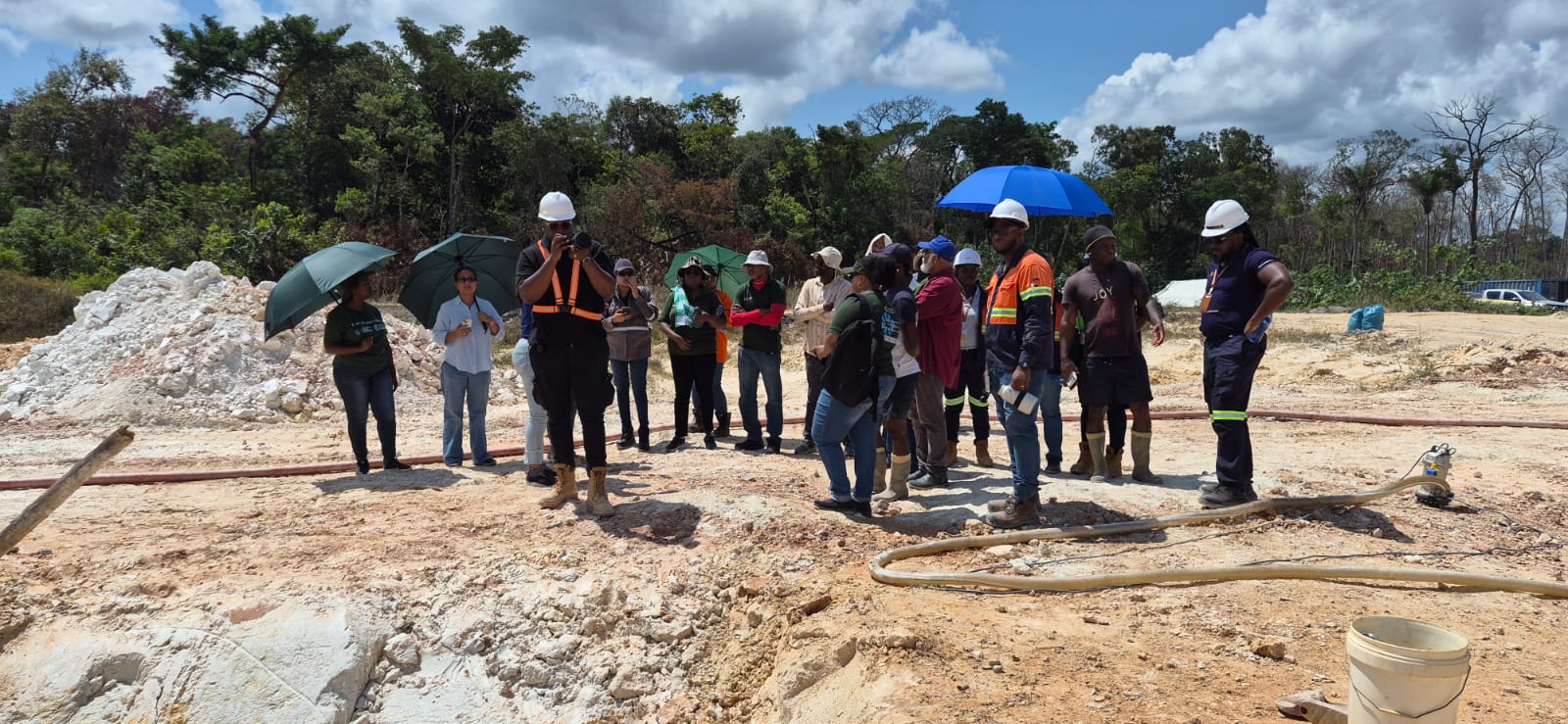
On Wednesday, 28 October 2026, representatives of the EMSAGS Project, RGM, Kamp Mining, the National Environmental Authority (NMA), the United Nations Development Programme (UNDP), and the planetGOLD Project visited the demonstration site, where the technology is currently being tested.
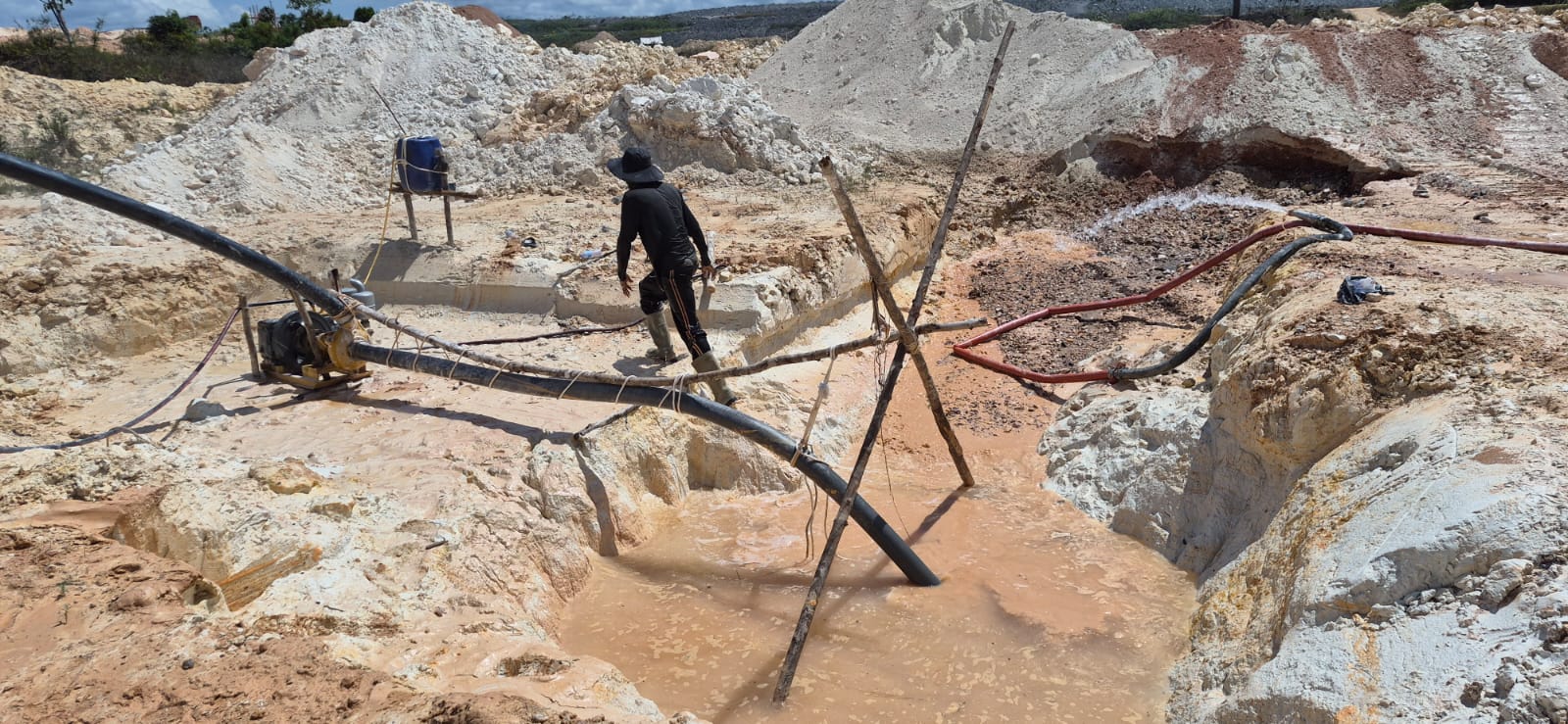
The demonstration site, located at Kamp Mining's mining operation within the RGM concession, has been established to provide small-scale gold miners with opportunities to become familiar with mercury-free gold mining methods in the future.
According to Jerry Finisie, Manager of Community Relations and Development at Rosebel Gold Mines, the company has been working with various partners for more than twenty years to make mercury-free gold mining possible on its concession.
"Miners are now aware that mercury can be harmful, but as long as they do not have access to a practical and reliable alternative, they will continue using the methods they are familiar with. As a country, we must work towards a situation where mercury is no longer used. This will not happen overnight, but we have to make a start," Finisie emphasized.
RGM therefore aims to contribute to the development of a well-functioning system that can also be applied at other mining locations across Suriname.
The miners involved also recognize the potential of the new technology. Gioki Amiemba of Kamp Mining noted that the new processing method takes slightly longer than the traditional approach.
"The old method was faster. With the new technology, the process takes a little longer, but the advantage is that we can work without mercury."
Rendaly, one of the trained miners, also expressed a positive view of the technology. "I believe the new technology is better because it does not involve the use of mercury."
According to Rendaly, miners can become familiar with the new methods and develop the necessary skills if they receive adequate training and guidance.
The EMSAGS Project is scheduled to conclude on 24 November 2026. To support the long-term sustainability of the initiative, the demonstration site, including its equipment, will be handed over to the Ministry of Natural Resources (NH). The aim is to facilitate the continued application of the technology and provide further training opportunities for small-scale gold miners.
Rosebel Gold Mines has expressed its commitment to remaining involved and exploring opportunities for the continuation of the initiative in collaboration with the Ministry of Natural Resources.
On Friday, 11 September 2026, equipment, including drones and printers, was handed over to the Gold Sector Regulation Commission (OGS) to support the registration of small-scale gold miners in Brokopondo and the area along the Saramacca River.
The handover forms part of the Pilot Project for Registration of Small-Scale Gold Miners in Brokopondo District and the Saramacca River Area. Through the use of drones, printers and registration materials, the project aims to generate reliable data on Suriname’s small-scale gold mining sector. The registration project is intended not only to provide insight into the number of active small-scale gold miners and the locations of mining activities, but also to provide OGS with practical experience for the implementation of a nationwide registration system.
Activities under the project commenced in June 2026 and are financed by the EMSAGS Project. The drones play an important role in mapping and monitoring mining areas, while the printers and other registration equipment support the recording and processing of data and the production of registration badges. In addition to drones and printers, EMSAGS is financing field equipment for staff, vehicles and the necessary ICT equipment to support the registration teams in carrying out their work. The total value of EMSAGS Project support for the registration activities exceeds USD 400,000.
During the handover, the importance of reliable data for policymaking and management of the sector was emphasized. “Measuring is knowing. When we have reliable data, we are better able to determine who is active, where activities are taking place, and what support and measures are needed”, said Preciosa Simons, Director of Mining at the Ministry of Natural Resources. She emphasized that the work must continue beyond the completion of the EMSAGS Project to further support the sustainable development of the small-scale gold mining sector.
For OGS, the handover represents a further strengthening of its operational capacity. “The equipment makes it easier for our teams to carry out their work in the field and to further improve registration and data collection,” said Wilson Balansi, General Manager of OGS. Staff members have also been trained in the use of drones. Seven drone pilots are now available to operate the equipment during field activities.
The activities initially focus on Brokopondo and the area along the Saramacca River. The intention is that the experience, equipment and capacity developed through this pilot will subsequently be used for registration activities in other areas, including Sarakreek, Sipaliwini, the Tapanahony River and the Lawa River. In this way, the investment will continue to contribute to the formalization, monitoring and sustainable development of the small-scale gold mining sector even after the EMSAGS Project has ended.
This is aligned with the objective of EMSAGS to strengthen the sustainable monitoring of the small-scale gold mining sector and promote the use of environmentally responsible mining technologies.